

The Inward
Dive Fund
Supporting justice-impacted individuals by reducing the financial and logistical barriers to accessing state-legal plant medicine facilitation services.
Whether you're browsing, applying, or just curious, thanks for being here.
Before you continue, we invite you to pause for five seconds and take one slow, deep breath.
Welcome to the Inward Dive Fund

“What I learned is anyone that has contact with the justice system is holding trauma and stress.”Henry Fields Lead of the Inward Dive Fund · Read his full letter ↓
Healing for those carrying the weight of the justice system
The Inward Dive Fund was created to provide Oregon state-regulated plant medicine services to individuals impacted by the criminal justice system, recognizing the deep trauma, systemic barriers, and healing needs of the formerly incarcerated, their families, and those working within the justice system.
Scholarships sized to need
Grant amounts vary per individual based on financial need, so support meets people where they are.
Vetted, experienced facilitators
Recipients are connected with facilitators experienced in supporting justice-impacted people, plus ongoing integration support.
The psilocybin product
Sometimes the psilocybin is donated. When it has to be paid for, it usually costs between $100 and $200.
We define "justice-impacted" broadly
A justice-impacted person is anyone who has experienced incarceration, arrest, probation, parole, or the collateral consequences of a criminal record, as well as the family members, legal advocates, and others who bear the emotional and systemic burdens of the justice system. This includes, but is not limited to:
You may qualify for support if you…
In addition to being justice-impacted with financial need, the Fund welcomes those who may not otherwise have access to this kind of care.
- Are 21 years or older
- Live anywhere in the U.S. or beyond
- Identify as justice-impacted (broadly defined)
- Have financial need
- May not otherwise have access to this form of healthcare
The grant at a glance
Grants cover the preparation, the journey and the integration afterward. The facilitator and/or service center must be licensed by the Oregon Health Authority (OHA).
Amounts are sized to each person’s financial need. Funds are paid directly to the OHA-licensed facilitator and/or service center once you and a facilitator agree to work together, never to the recipient directly.
What the grant covers
- Preparation before your session
- The cost of licensed psilocybin facilitation
- A referral to Henry Fields or a vetted "Recommended Facilitator"
- Ongoing integration support after your session
What it does not cover
- Travel to and around Oregon
- Food and lodging
Applying for the Inward Dive Fund
The application window is open, we recommend applying as soon as you are able.
Read the details below first
Review who can apply and what the grant includes, then scroll down to read Henry's letter and our FAQ.
Complete the application
Apply through our secure Typeform application. It can take up to an hour, covering what's involved in receiving plant medicine in Oregon plus personal, financial, mental health, facilitation, and integration questions.
Stay in the loop
Subscribe to our newsletter for the most up-to-date information about the Inward Dive Fund. We communicate with all applicants over email.
Get matched & supported
Approved recipients are connected with a vetted facilitator; funds are then directed to the licensed facilitator or service center on your behalf.
Care within 30 acres of Oregon forest
Inward Dive Fund grantees receive their services at vetted, OHA-licensed service centers — among them Fernlove, a state-licensed psilocybin service center about an hour outside Portland, set on 30 wooded acres above Hagg Lake.
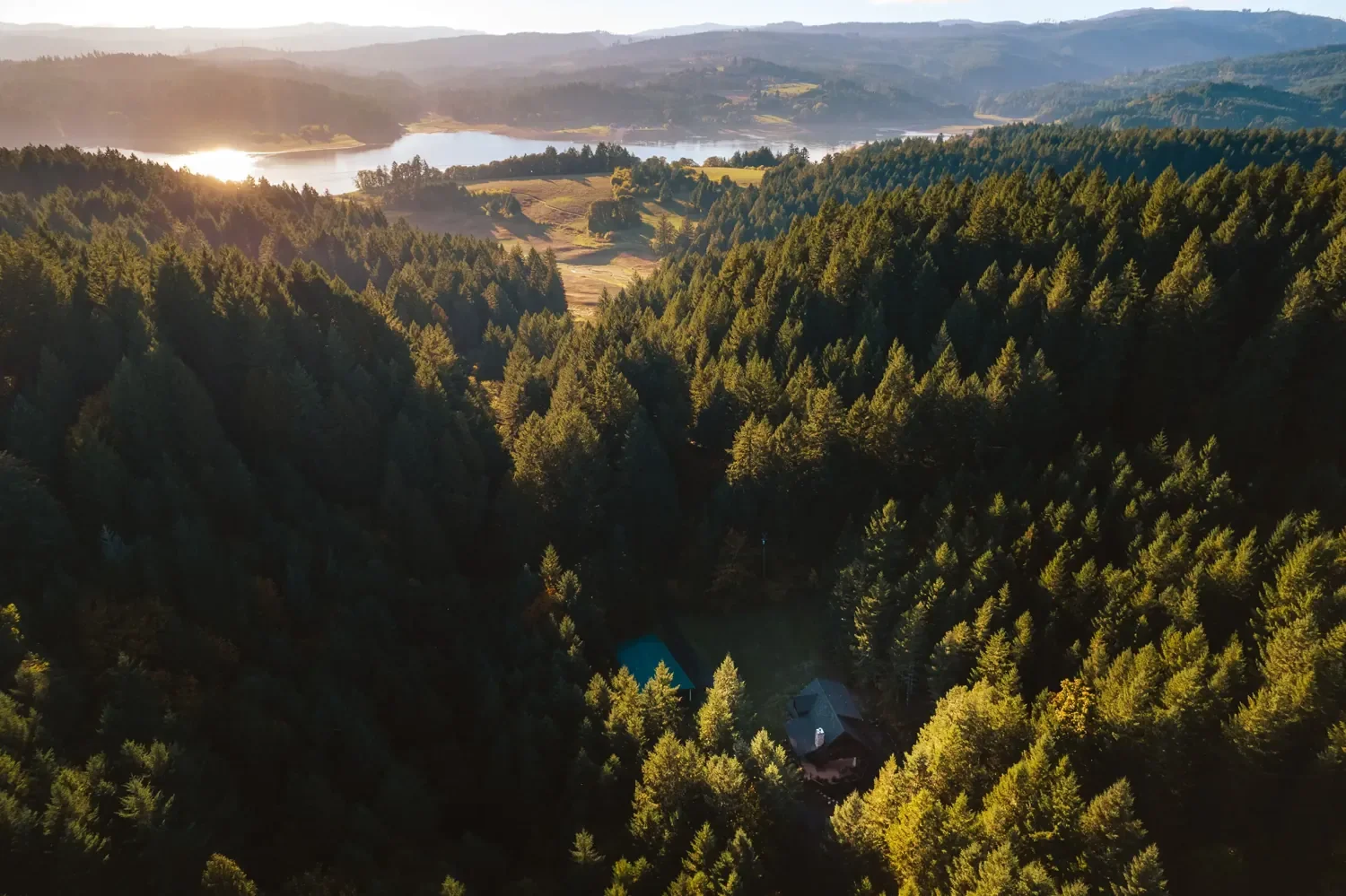 Fernlove · near Hagg Lake, Oregon
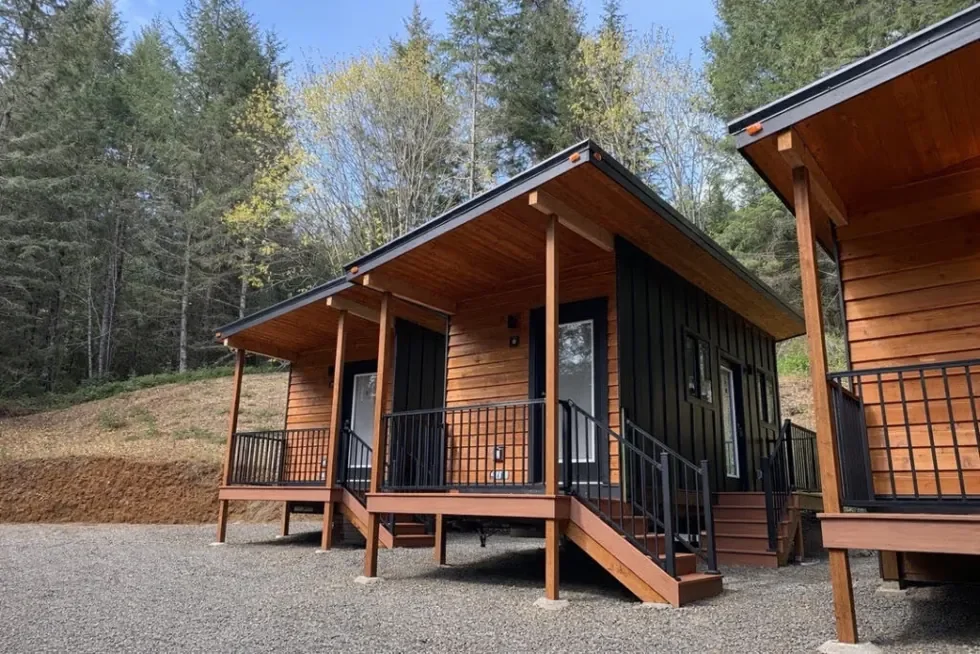
Fernlove works exclusively with licensed facilitators and psilocybin sourced from licensed manufacturers, with thoughtful, comfortable accommodations throughout the property.
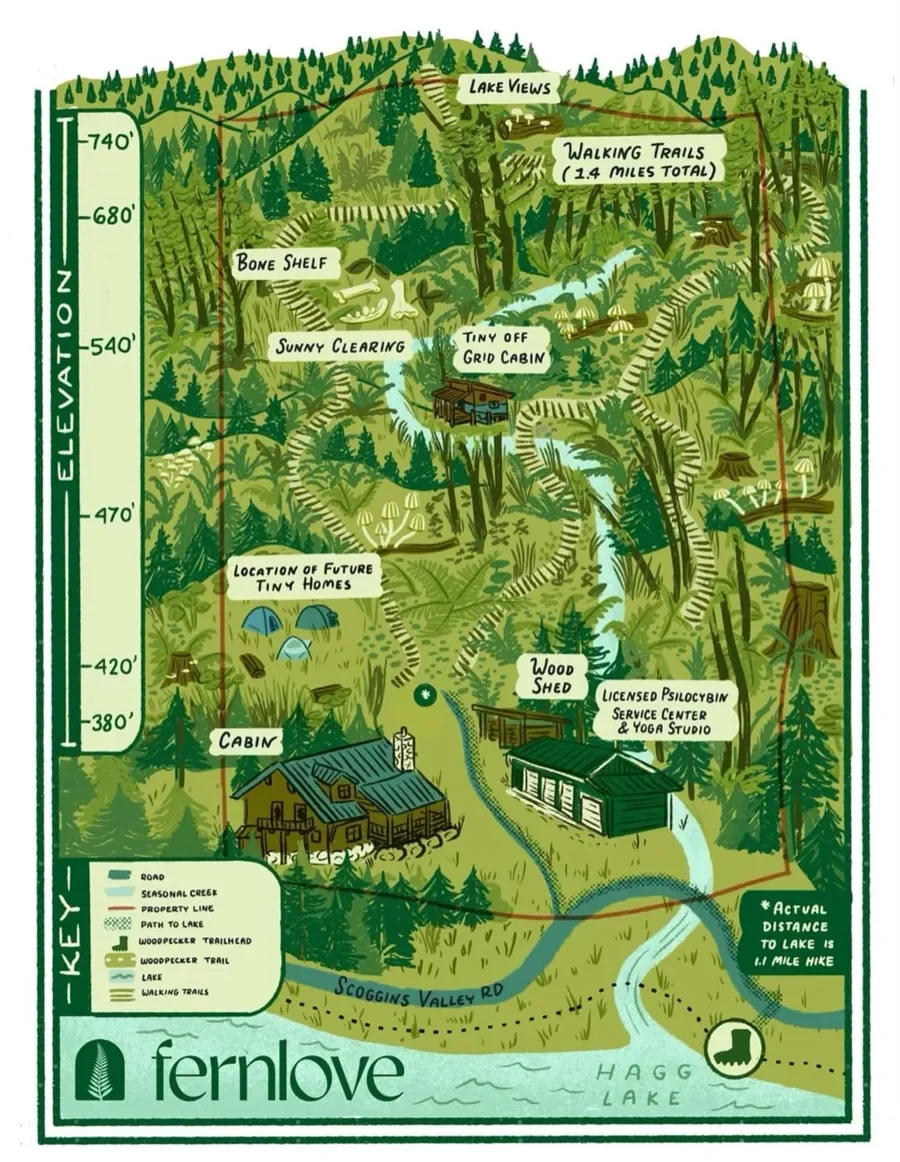
From the transformative Administration Room to the solitude of the cabins and tiny homes, and 1.4 miles of walking trails winding down toward the lake, every part of the setting is designed to support self-discovery and healing in nature's serene embrace.



A whole landscape made for healing
A licensed psilocybin service center and yoga studio, a main lodge, cabins and a tiny off-grid cabin, and 1.4 miles of walking trails — threading through the forest and down toward Hagg Lake.

How can I support the Inward Dive Fund?
The Inward Dive Fund is supported entirely through donations, so we aim to offer as many grants as possible based on the support we receive. Every gift helps someone impacted by the justice system access deep healing.
Henry Fields
Hi, my name is Henry Fields. When I got out of rehab nineteen years ago, I was sleeping on a friend's couch. My friend, Sandra "Sam" Stein, who has since passed over, was a medium. She often suggested to me that I was fated to walk the path of a healer and that I was somehow going to work with people that were incarcerated.
The night that I finally quit drinking was due to a moment of clarity. I was drunk and got into a physical altercation and found myself headed to jail in Compton. When the officer asked, "Do you have any gang tattoos or reason to believe that anyone inside will hurt you?" it was as if the record of my reality started to skip. As a Black male with substance abuse issues, there was a constant fear of how likely it was that I would eventually end up behind prison bars. Fortunately, they let me sleep it off in the drunk tank and the following day I went to an AA meeting and never drank again.
Six years ago, I started Inward Dive. This is a coaching service that uses spiritual guidance, hypnosis and shamanic practitioner concepts to assist people going through an awakening process. Much of what I share was learned from experiences I had while using psilocybin to pull myself out of a deep depression. The main takeaway was that I was out of alignment, and the energy that I was spending fighting the universe had left me energetically and spiritually depleted. The end result was depression. Around that time I started on my path as a psilocybin facilitator. Being able to have a vocation that is dharma has been invaluable to my own healing journey.
The Universe is magical.
In order to get licensed in Oregon as a psilocybin facilitator we must submit an equity and inclusion plan. This entails identifying a population which could benefit from outreach about the efficacy of psilocybin. We are also encouraged to offer a sliding scale to this population. As an acknowledgment to my friend Sam's vision and my personal past, I chose the formerly incarcerated as my demographic. Before I even put pen to paper, the only client that I had worked with that was previously incarcerated reached out to refer me to a friend of his. This client was also formerly incarcerated and was a part of an organization that served the formerly incarcerated. Through this organization I was immediately given many referrals to other formerly incarcerated people that were suffering. Through another contact, I also began to work with lawyers, detectives and criminal justice advocates. What I learned is anyone that has contact with the justice system is holding trauma and stress.
There are currently 1.8 million people incarcerated in the United States.
Many if not most of these souls are there due to adverse childhood experiences, substance abuse and undiagnosed mental health issues. Instead of receiving loving guidance and justice, they are thrown into extremely punishing conditions where they will be re-traumatized. In addition, mandatory minimums create sentencing guidelines that are extreme in every way. When someone is incarcerated, their loved ones suffer. A child is missing a parent, a sibling is missing their siblings. Wives are without their husbands or vice-versa. In addition, criminal justice advocates and attorneys are taking on the Sisyphean task of trying to change the profit-over-justice mentality of the American justice system.
This is why I created the Inward Dive Temple, a 501(c)(3) that is raising funds to offer psilocybin services to anyone that has been impacted by the criminal justice system. This includes the formerly incarcerated, family members, advocates and attorneys. We will be offering grants to applicants to have the services free of charge or a partial scholarship based on the needs of the applicants.
Psilocybin is a powerful tool to access one's subconscious to release traumas, reframe narratives and feel replenished by a deep sense of interconnection. The experience done with proper preparation and integration has proven itself to be very useful to those impacted by the justice system.
Please consider making a donation if this vision resonates with you. Also, please take a moment to think about whether you know anyone that you feel would benefit from psilocybin services and forward them the application.
A fully funded retreat, and a study most of them chose to join
Last July the Inward Dive Fund brought about a dozen previously incarcerated people to a licensed Oregon service center for three days, fully funded by the Inward Dive Fund. Most opted into an observational study running alongside the retreat, believed to be the first of its kind with this group. Results are pending.
Feedback to the research team was positive overall, and we came away with a clear list of things to do better next time. We are planning the second retreat now.
Frequently asked questions
Still have questions after reading? Email us, we're happy to help.
What is the Inward Dive Fund?
The Inward Dive Fund supports justice-impacted individuals by reducing financial and logistical barriers to accessing state-legal plant medicine facilitation services.
Who can apply for the Inward Dive Fund?
The Inward Dive Fund is open to everyone who is 21 years or older, has been justice-impacted, has financial need, and is anywhere in the United States and beyond.
In addition to the primary criteria of being justice-impacted and having financial need, the Fund prioritizes applicants who come from communities that may not typically have access to this form of healthcare, which we define broadly (e.g. where someone lives, age, race, ethnicity, cultural barriers, occupation, physical and/or cognitive ability, gender, sexual orientation, etc.).
To summarize, applicants will qualify for financial support if they:
- Are 21 years or older
- Live anywhere in the U.S. or beyond
- Identify as justice-impacted (broadly defined)
- Have financial need
- May not otherwise have access to this form of healthcare
What defines a "justice-impacted individual"?
A "justice-impacted" person is anyone who has experienced incarceration, arrest, probation, parole, or the collateral consequences of a criminal record, as well as their family members, legal advocates, and others who bear the emotional and systemic burdens of the justice system.
If you have further questions about what qualifies someone as justice-impacted, please email us at info@sherieckert.org. If you think you might qualify even if you don't neatly fall into a category, there's a good chance we'll deem you eligible.
What are the health criteria for receiving psilocybin services?
While research reveals a strong safety profile, psilocybin is not for everyone, and some conditions may be disqualifying. Eligibility depends in part on the Psilocybin Facilitator or Service Center. The following conditions or situations may be contraindications to receiving psilocybin services:
- Mental health conditions such as schizophrenia, schizoaffective disorder, schizophreniform disorder, major depressive disorder with psychotic features, psychotic disorder, bipolar disorder, mania, delusional disorder, any dissociative disorder, substance-induced psychosis, or severe paranoia
- Current drug or alcohol withdrawal symptoms, or active/severe drug or alcohol misuse
- Cardiovascular conditions such as poorly controlled high blood pressure, prolonged QTc interval, congestive heart failure, history of cardiac arrest, history of ventricular arrhythmia (V. Fib/V. Tach), presence of an AICD, coronary artery disease, angina, tachycardia, arrhythmia (e.g. atrial fibrillation), Wolff-Parkinson-White Syndrome, heart valve disease, artificial heart valve, cardiac hypertrophy, cardiomyopathy, aortic disease, or aneurysms
- Gastrointestinal conditions such as moderate to severe liver impairment or gastric outlet obstruction
- Dialysis or severe kidney disease
- Neurologic conditions such as dementia, cognitive impairment, seizure disorders, epilepsy, history of stroke or transient ischemic attack, or cerebral aneurysm
- Taking medications such as lithium; two or more medications affecting your serotonin system (e.g. SSRI, SNRI, SPARI, TCA, and MAO inhibitors); or medication for angle-closure glaucoma
- Pregnancy
- Tuberculosis, COVID, and other highly contagious diseases
- A first-degree relative (parent, sibling, child) with schizophrenia, bipolar disorder, or any psychotic or dissociative disorder
If you are living with any of the above and cannot resolve the condition or situation before receiving psilocybin therapy, we recommend that you do not apply, as there is a high probability you will not be deemed eligible to receive services.
Disclaimers
Legally, someone cannot receive psilocybin if, at the time, they: (1) have been diagnosed with active psychosis; (2) take lithium or have taken it within the past 30 days; or (3) have ideation of harm to themselves or others.
We are not making any decision or confirmation that someone should receive psilocybin services. We are determining whether an applicant is a good fit to receive a grant from us, so they can pursue a licensed facilitator, where both the client and facilitator will decide whether to work together.
Is this legal?
In 2020, voters in Oregon passed Ballot Measure 109, also known as the Oregon Psilocybin Services Act, allowing the "manufacture, delivery, and administration" of psilocybin within licensed service centers, supervised by licensed facilitators. In 2022, Colorado became the second state to establish a legal regulated access program for psilocybin and other related psychoactive plants. While psilocybin is legal for use within the Oregon and Colorado state-regulated models, it remains a federally illegal Schedule 1 drug under the Controlled Substances Act.
Who is behind the Inward Dive Fund?
The Inward Dive Fund is an initiative from the Sheri Eckert Foundation (SEF), in partnership with Henry Fields, an Oregon-licensed facilitator and integration coach.
SEF is committed to creating a future where Oregon and Colorado's evolving psychedelic ecosystem is accessible to participants from diverse backgrounds, financial means, and geographies around the state and country. Learn more about SEF here.
Our Board of Directors is David Bronner, Tom Eckert, and Nathan Howard. Our team consists of Nathan Howard, Executive Director, and Lorena Dame, Director of Operations and Development. We also work with an organization called Magical Teams to support our application process.
What's the grant amount and how can it be used?
Grant amounts vary with each person’s financial need.
Grants cover the preparation, the journey and the integration afterward. Sometimes the psilocybin is donated. When it has to be paid for, it usually costs between $100 and $200. Inward Dive Fund grants do not cover travel, food or lodging.
The actual funds are directed to the facilitator and/or service center, which must be licensed by the Oregon Health Authority (OHA). Once you and a facilitator agree to work with each other, we direct the funds to the facilitator. Grant recipients have the ability to be referred to Henry Fields or one of our "Recommended Facilitators."
When are grants issued from the Inward Dive Fund?
Our goal is to award initial grants in late spring of 2025 and to continue awarding grants on a rolling basis over the course of 2025 and 2026. We communicate with all applicants over email.
What's the selection criteria and selection process?
Grants are awarded through a competitive application process, since the number of applicants may exceed the funds we can distribute. Selection criteria is primarily based on the applicant's financial need, whether they belong to an underserved population (e.g. geography, race, ethnicity, cultural barriers, occupation, physical and/or cognitive ability, age, gender, etc.), and a demonstrated understanding and readiness to receive psilocybin therapy. Each of these categories is detailed in the application.
What is the group or cohort model?
The Fund is currently designed to support groups of 4–6 individuals undergoing two days of psilocybin facilitation. Cohorts of leaders from similar backgrounds or communities may be self-selected or grouped by the Fund's reviewers based on appropriateness of fit. We believe the cohort model fosters peer support and the opportunity for ongoing community following the psilocybin services. Through a group model, our goal is to increase the quality of care while bringing down overall costs for grant recipients.
If there is any reason an applicant would prefer not to participate in this cohort model and would require individual care, there is a chance to indicate so within the application, and such a request will be considered on an as-needed basis.
Why group over one-on-one?
In very recent history, group work has become less common, in part due to a Western approach to medicine driven by the FDA's approach to drug development. For this reason, most people in the United States are less accustomed to group work and less likely to be comfortable with it.
However, psychedelics, especially psilocybin, have a long and successful history of being used in group settings, including not just in a clinical context but also in Indigenous cultures going back thousands of years. Not only does group work save time and money, but studies show that when people feel part of a community, it improves their psychological well-being and connectedness.
We believe this is one reason people who begin with a preference for individual work often end up strongly preferring group after they experience it. We know from research and firsthand experience that individuals rarely heal or thrive in isolation. For more, see the research from the National Library of Medicine on combining psychedelics with group psychotherapy.
Where can I learn more about psilocybin services in Oregon?
Visit the State of Oregon's official website for Oregon Psilocybin Services, which contains many resources about the model and sample forms, including the Informed Consent and Client Bill of Rights forms.
You can also read the OPS Fact Sheet, review the Scientific Literature Review, or consult the comprehensive Healing Advocacy Fund Client Guide and a sample Client Intake & Screening form.
What is your privacy policy?
Any information you share with us is strictly confidential and will not be shared with any person, for any reason, without your written (or electronic) permission. Submission is voluntary, and refusal to provide information will not subject you to any adverse treatment.
The Sheri Eckert Foundation will only use, process, and store your personal information for the purpose of reviewing, managing, and executing the program. Your information may be processed and stored on IT platforms and accessed by SEF employees and contractors for this purpose. We do not share, sell, or lease your personal information to third parties for other purposes unless required by law. (At the time of this update, we have never received a legal request for personal information.)
Is Typeform secure?
All workstations and Typeform devices are fully encrypted to guarantee the confidentiality of the information they contain. Typeform's data protection standards are HIPAA compliant.
Grants are open
Take 30 seconds to complete our interest form to receive a grant from us.
Complete the interest formTakes 30 seconds